
Category: SCSkills Updates
-

November & December 2026 Live Online Training Calendar: Strengthening Practice, Confidence and Compliance
Social Care Skills is pleased to announce its November and December 2026 Live Online Training Programme, bringing together a range of practical, CPD-focused learning opportunities for professionals working across Children’s Homes, Supported Accommodation, Fostering Services and wider children’s social care. As we approach the end of 2026, this is an…
-

We’re Turning THREE on the SIXTH! 🎉
Social Care Skills turns THREE on 6 October! To celebrate, we’re marking our third anniversary from the THIRD to the SIXTH with 20% off eligible upcoming training courses using code SCSKILLS3.
-

Bring Social Care Skills Training Directly to Your Team
Social Care Skills courses can be delivered directly to your team, in person or via Microsoft Teams. Choose an existing CPD accredited course, have it adapted to your service, or ask us to develop something new.
-

October Training Programme: New Courses, Practical Learning and Professional Development
Our October Training Programme is now available, bringing together seven seminars covering direct practice, care planning, safeguarding, regulation, inspection, cultural competency and the experiences of children and young people. In October, Social Care Skills is also introducing several new courses, expanding our programme into areas of practice that are highly…
-

Leaving Care: Independence Must Not Mean Being Alone
A new Children’s Social Care Blog post has highlighted a difficult but important issue for everyone supporting young people in and leaving care: the transition towards independence can also become a transition into loneliness and isolation. Published on 25 August 2026, Tackling the loneliness of leaving care is written by…
-
Learning Pathway Assessment (LPA)
A young person may need support with budgeting, cooking, personal safety, relationships, emotional wellbeing, employment, communication, digital safety and many other areas. Not everything can, or should, be addressed at once. Social Care Skills has therefore developed the Learning Pathway Assessment (LPA): a structured Excel-based assessment and planning tool designed…
-

September 2026 Online Seminars: Practical Learning for Children’s Social Care
September brings a full programme of Social Care Skills online seminars, with eight sessions covering some of the most important areas of practice, safeguarding, leadership and quality assurance across children’s homes, supported accommodation and wider children’s social care. From strengthening risk assessments and support planning to understanding regulatory responsibilities, managing…
-

Missing from Care: Prevention, Response and Learning
Every missing episode should be treated as a safeguarding incident, not simply an absence. While finding and returning a child safely is always the immediate priority, effective practice goes much further than this. The Department for Education’s Statutory Guidance on Children Who Run Away or Go Missing from Home or…
-
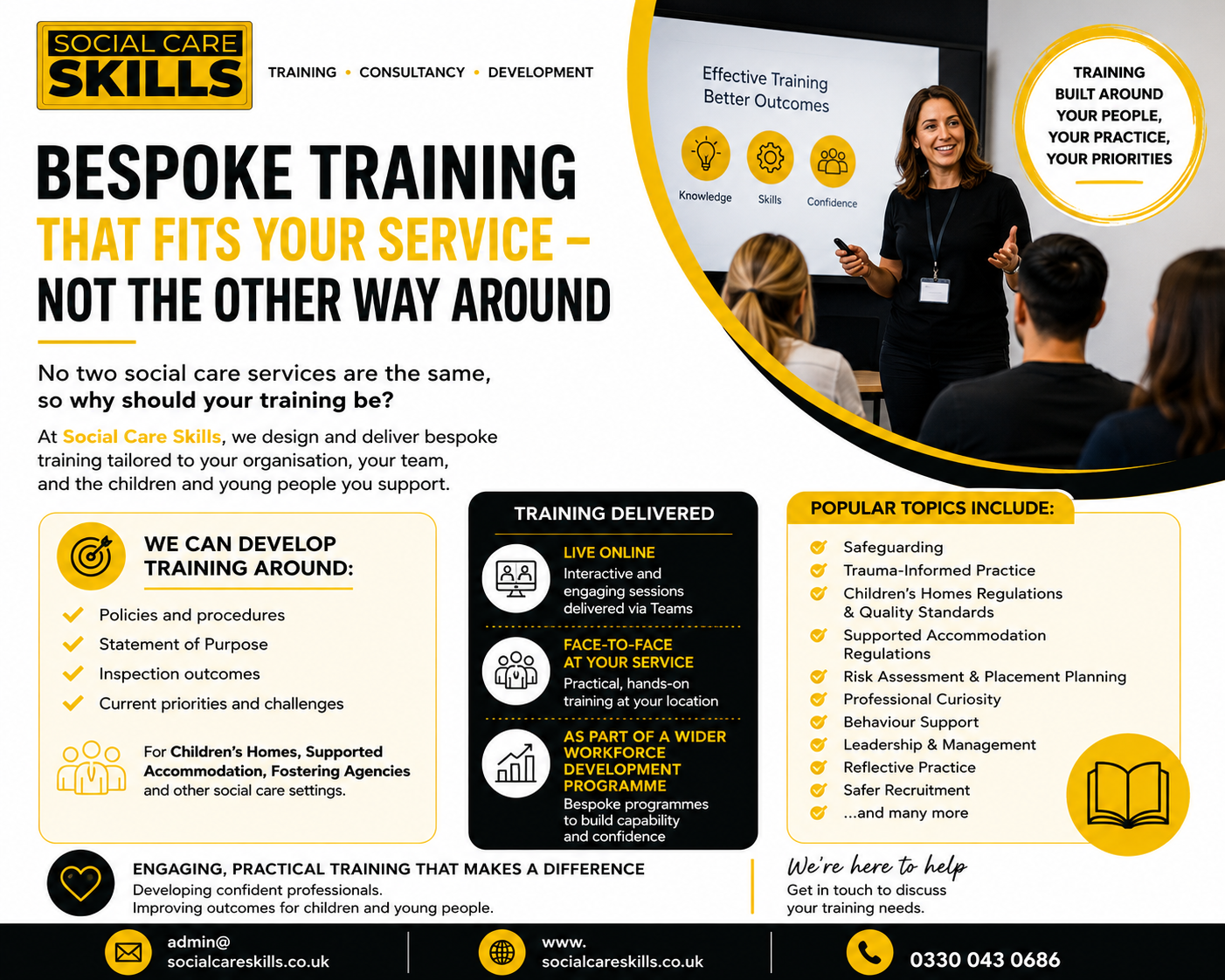
Bespoke Training That Fits Your Service: Not the Other Way Around
Every social care service is unique. While regulations provide a common framework, no two organisations share the same culture, workforce, challenges, or ambitions. That’s why training should never be a one-size-fits-all solution. At Social Care Skills, we provide bespoke training that reflects the needs of your organisation. Whether you’re looking…
-
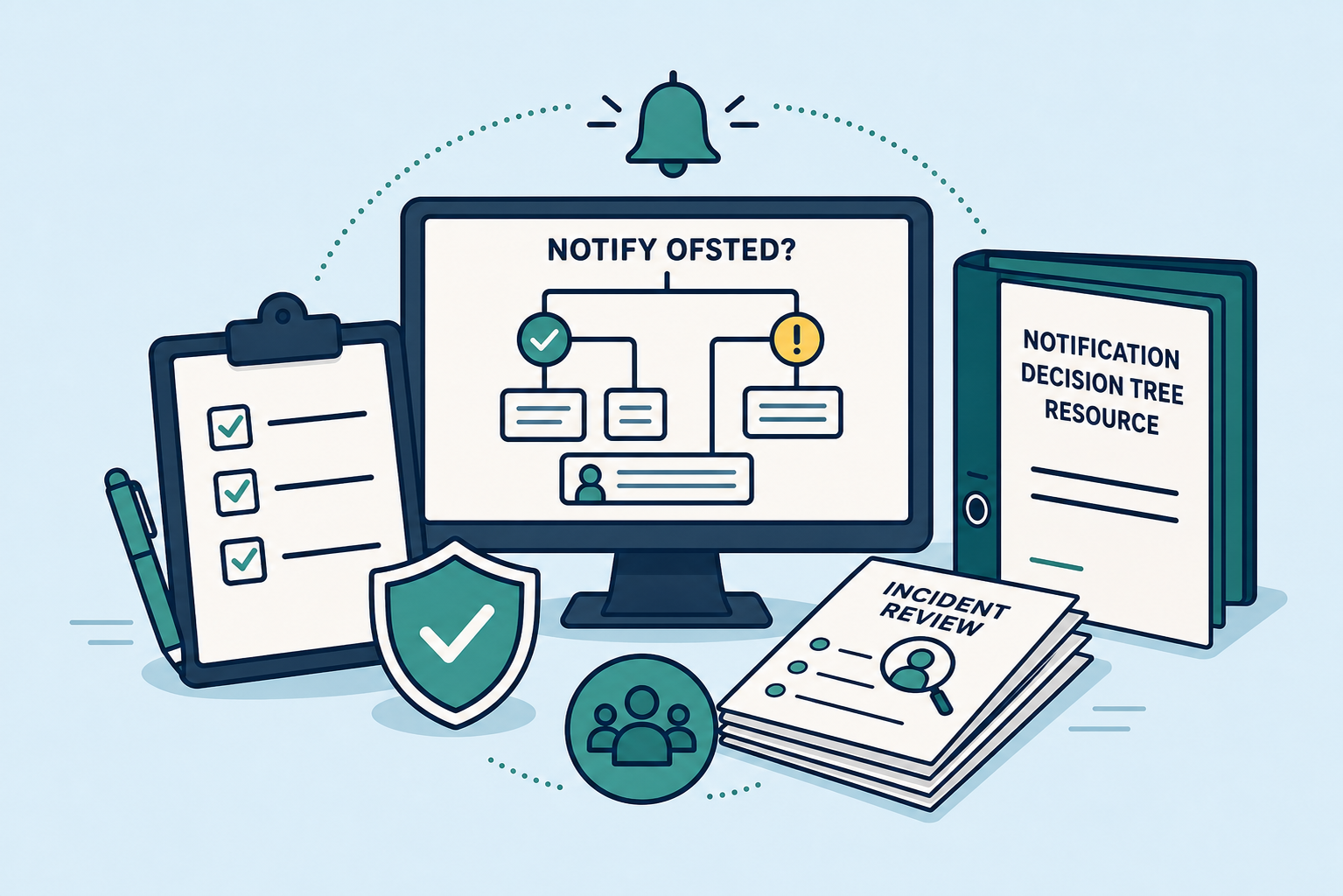
Should This Incident Be Notified to Ofsted? Why the Answer Is Not Always Straightforward
Serious incident notifications are an important part of regulatory oversight across children’s social care. However, deciding whether an incident should be notified to Ofsted is not always as straightforward as identifying that “something serious happened”. During training, consultancy and compliance work, we regularly see uncertainty around notification decisions. Does police…