
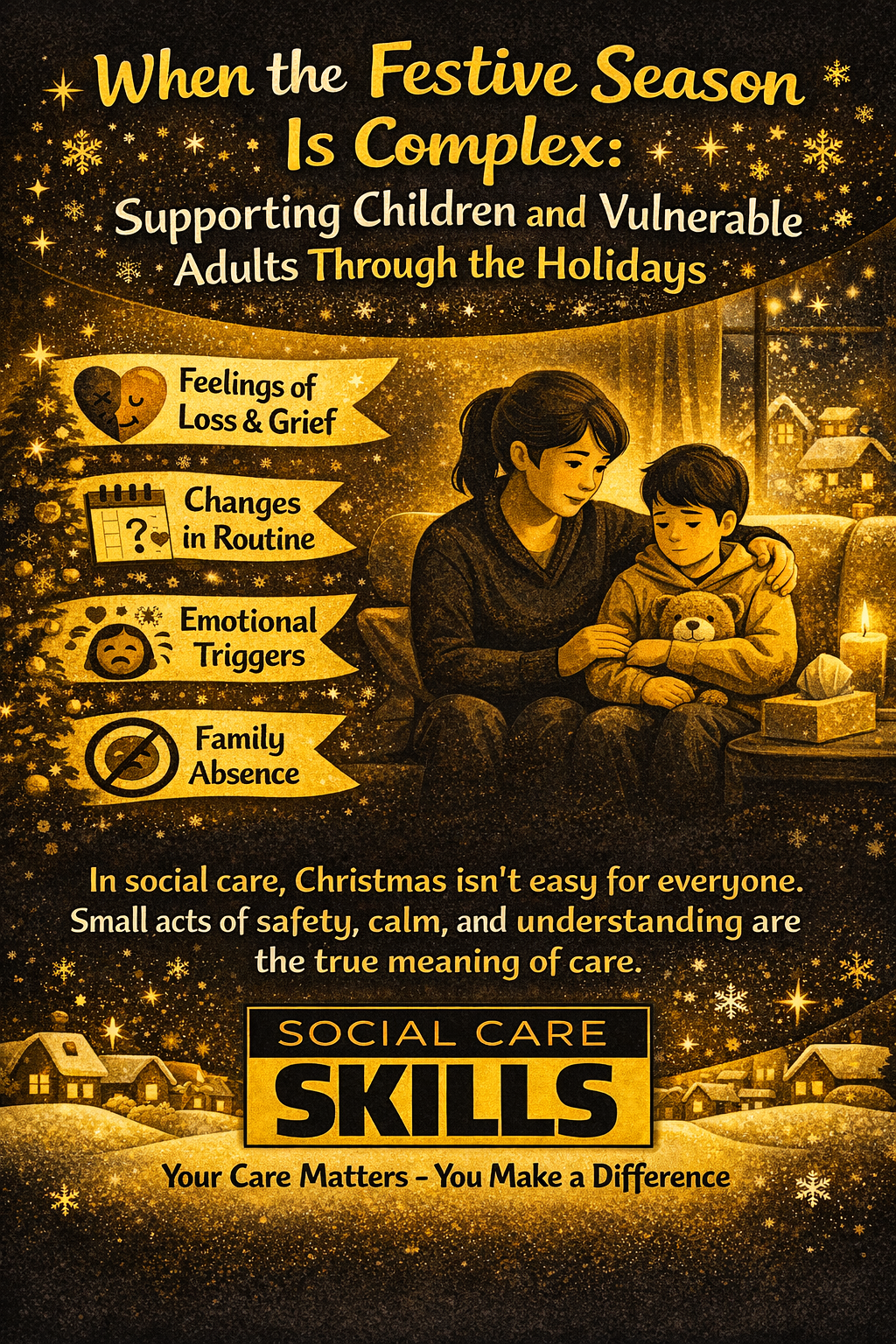
For many people, the festive season is associated with celebration, connection, and joy. In social care, we know the reality is often far more complex. For children and vulnerable adults, Christmas and other holidays can amplify feelings of loss, uncertainty, grief, and exclusion rather than comfort and happiness.
Changes in routine, heightened expectations, sensory overload, and constant reminders of family absence or past trauma can make this time of year particularly difficult. While decorations go up and calendars fill with activities, the emotional landscape for those we support can become increasingly fragile.
Supporting individuals through this period requires more than festive activities. It requires attunement, flexibility, and a deep understanding of what this season may represent for them.
Understanding what sits beneath behaviour
During the holidays, behaviours may escalate or shift. Anxiety, withdrawal, irritability, risk-taking, or emotional dysregulation are not uncommon. These responses are rarely about the event itself; they are often expressions of unmet emotional needs, grief, or a sense of being different from the world around them.
Support begins with curiosity rather than correction. Asking “what might this person be experiencing right now?” allows staff to respond with compassion instead of control. Normalising mixed feelings and acknowledging that it is okay not to feel festive can be incredibly containing.
Protecting routine while allowing flexibility
Structure and predictability remain crucial during the festive period. While some adjustments are inevitable, maintaining core routines around sleep, meals, and key daily activities helps create a sense of safety. Where routines do change, preparing individuals in advance and offering choice wherever possible can reduce anxiety.
Flexibility matters too. Not everyone will want to engage in group celebrations or festive events, and that should be respected. Supporting someone might mean offering a quiet alternative, allowing space away from stimulation, or simply sitting alongside them without expectation.
Creating meaning without pressure
Festive activities should never become a measure of success or happiness. What matters is not how “Christmassy” the environment looks, but how safe and seen people feel within it. Small, relational moments, shared meals, calm conversations, familiar films, or reflective activities often hold far more meaning than large celebrations.
For some, this season may also open space for remembrance or reflection. Supporting life-story conversations, memory-making, or gentle acknowledgment of absent relationships can help individuals feel understood rather than isolated in their experience.
Being emotionally available
One of the most powerful forms of support during the holidays is emotional availability. This means being present, listening without trying to fix, and allowing difficult feelings to exist without rushing to make them disappear. Staff modelling emotional regulation and authenticity helps create an environment where individuals feel permitted to express what they are truly feeling.
It also means recognising when someone may need additional support, whether through increased check-ins, key-worker time, or access to therapeutic input.
Supporting staff to support others
None of this is possible if staff themselves are unsupported. The emotional labour of holding space for others’ pain, while being away from family or carrying their own experiences of the season, is significant. Team check-ins, reflective supervision, and simple recognition of the challenges staff are navigating are essential [See our “Supporting and Motivating Social Care Staff at Christmas” post].
When staff feel valued and contained, they are better able to offer consistency, empathy, and stability to those they support.
A season of care, not performance
In social care, the festive season is not about recreating a perfect Christmas. It is about providing safety, dignity, and relational security during a time that can feel overwhelming and exposing for many.
By prioritising emotional safety over expectation, connection over activity, and compassion over compliance, services can help children and vulnerable adults navigate this complex season with greater stability and support.
Sometimes, the most meaningful gift we offer is simply being there.
Leave a Reply